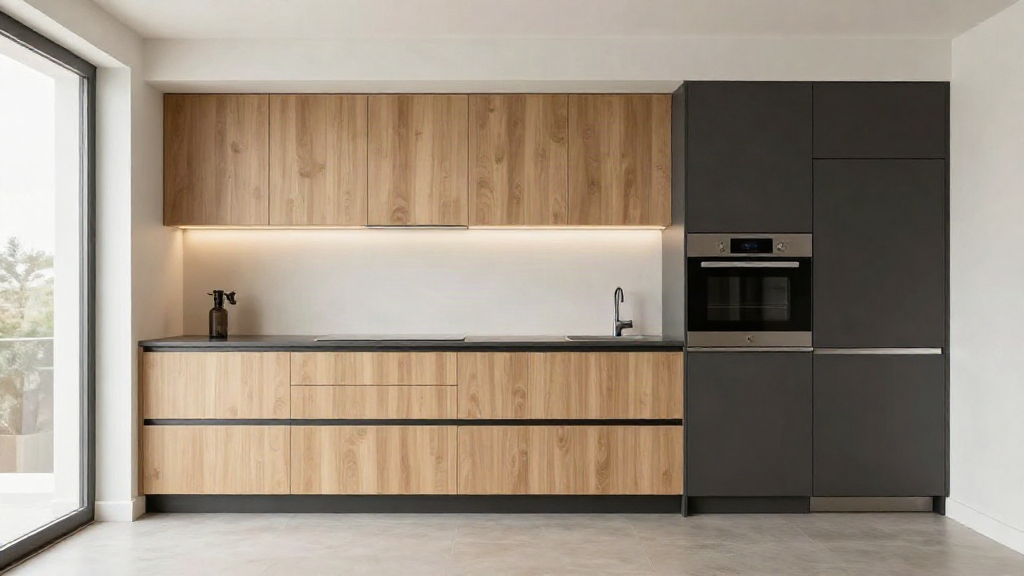

A kitchen renovation in Malta is a planning problem before it is a design problem. Coastal humidity, salt-laden air, compact layouts, and a building season shaped by summer heat all decide what will still look right in ten years. Get the order of decisions right and the project runs calmly; get it wrong and the budget absorbs the corrections.
This guide walks through the six steps we take with homeowners and commercial clients before a single cabinet is ordered.
Step 1: Start with how the kitchen is actually used
Before finishes, describe the room’s working life. How many people cook at once? Is there an island, a breakfast counter, or a table? Do you need space for appliances that generate heat and steam – ovens, dishwashers, a large fridge – and where does the ventilation go?
Write down three things you would never compromise on and three things you could happily drop. This list protects the budget later, when a beautiful finish tries to pull money away from something more important, such as storage or a workable layout. In Maltese apartments and townhouses, layout constraints are usually the real limit, not floor area, so measure door swings, window reveals, and service positions before you allow yourself to fall in love with a design.
Step 2: Set the budget before you commit to a finish
Kitchen costs in Malta are driven less by the size of the room than by how much of the room you change. A like-for-like replacement of doors and worktops costs a fraction of a renovation that moves plumbing, relocates a hob, removes a wall, or re-routes electrics. The main cost drivers, in the order they usually surprise people, are:
- Cabinetry construction and the brand of the kitchen system
- Worktop material, and whether the layout needs templates and curved or cut-out work
- Appliance specification and the number of integrated units
- Relocating water, waste, and electrical services
- Structural work, plastering, flooring, and making good
- Delivery, installation, and disposal of the old kitchen
Treat the total as three bands – a refresh, a full replacement in the same layout, and a layout-changing renovation – and decide which band you are genuinely in. Then add a contingency of around ten percent. The only number worth trusting is a quoted one, itemized, so ask for it in writing and compare each line rather than the bottom figure.
Step 3: Choose materials that survive Maltese humidity and salt air
Worktops and surfaces
Solid surface is the most forgiving choice in a humid, salt-exposed climate because it is non-porous, has seamless joins with almost invisible bond lines, and can be repaired rather than replaced. DuPont Corian, which we fabricate, can be thermoformed into curves, backlit as a panel feature, and refinished on site – scratches and heat stains can be sanded out years later. That repairability is the difference between a worktop that ages and one that merely wears.
Natural stone and quartz remain excellent options, but they are harder to renew once damaged, and stone needs sealing and care in coastal conditions.
Cabinetry
Humidity punishes carcasses long before it punishes doors. Look at the construction and the moisture resistance of the boards, the quality of the hinges and runners, and how the units are fixed and adjusted on site. Our German kitchen family – Bauformat and Burger – gives you engineered carcass construction, soft-close hardware, and a level of standardization that makes repairs and future additions straightforward rather than bespoke one-offs.
Taps and fixtures
Fixtures take more daily abuse than any other component. We specify GUGLIELMI and Graff for kitchens and bathrooms because their cartridges and finishes hold up to constant use, and for large commercial projects we turn to Delabie, where heavy-duty operation and accessible design are the priorities rather than domestic styling.
Step 4: Sequence the build to a realistic timeline
Most kitchen renovations move through the same phases. Expect design and measurement first, then a quote, then an order with a lead time, then site preparation. Demolition and first-fix services follow, then cabinetry installation, then templating and fitting of the worktop, then second-fix connections and finally a snagging visit.
Two local realities stretch timelines: imported cabinetry and appliances carry shipping lead times that are not negotiable once ordered, and the Maltese summer and the December holidays slow every trade on the island. Build slack around those windows instead of assuming the schedule will absorb them, and never demolish the old kitchen before the new order is confirmed.
Step 5: Solve storage, lighting, and services before finishes
Storage decisions are structural. Drawers generally beat cupboards for daily use, corner systems reclaim dead space, and a planned waste-separation zone prevents a bin from living in the middle of the floor. Zoning the room into washing, preparation, and cooking areas keeps the layout efficient even in a narrow galley kitchen.
Lighting should be layered rather than solved with one ceiling fitting: task light over the worktop, ambient light for the room, and accent light for a feature such as a backlit panel or a display shelf.
Services belong in this step too. If filtered water is on your list, plan it now rather than after the worktop is cut – a single-use filter needs a dedicated feed and clearance under the sink. The RO16078 single-use water filter delivers 10,000 liters of autonomy and a twelve-month lifespan, which makes it a low-effort addition during a renovation and an awkward retrofit afterwards.
Step 6: Compare quotes like for like
Ask every supplier to quote the same scope and to state what is excluded. Watch for missing disposal of the old kitchen, making good after service work, connection of appliances, and whether templating is included. Confirm who is responsible for the worktop measurement, because an error there delays the whole project. A well-run kitchen supplier in Malta will show you the plan, the specification, and the price in one document, and will be comfortable explaining each line.
The next step is a conversation, not a catalogue
Planning a kitchen renovation in Malta is mostly a matter of deciding in the right order: use, budget, materials, timeline, services, then quotes. Bring your measurements, your photographs, and your three non-negotiables to our showroom in San Gwann. Let us give you a free consultation or a free quote, and we will turn the plan into a kitchen built to be lived in for decades, not replaced in five years.